Follow your curiosity. There is no particular place to begin.
Our approach
A little space to return.
Our goal is simple: To help you find steadiness within yourself and bring more care into everyday life.
Through Hatha yoga, pranayama, Yoga Nidra, and quiet reflection, each practice offers a chance to pause, listen, and begin again.
Anima Mundi means “soul of the world”—a poetic way to describe the living world we share. Here, it’s an invitation to notice connection in ordinary moments: a breath, a sound, the ground beneath us.
This practice resonates for me with tikkun—the work of restoring connection—and with life (חַי). Small acts of attention and care can help us feel more connected to the life we share.
BlueDot began as a small reminder to pause, breathe, and return to the day with greater awareness. The name also brings to mind Earth as our small blue home, shared by all forms of life.
One goal of BlueDot Yoga is to deepen our familiarity with awareness itself: the knowing presence in which thoughts, emotions, sensations, and everyday experiences appear. Gentle movement, breath, and meditation offer ways to explore this presence and bring it into daily life.
Explore awareness more deeply
Awareness recognizing itself
First, we notice a thought, a feeling, or a sensation. The awareness that notices can be called the witness. “Witnessing the witnessing presence” invites us to become aware of that awareness itself.
In the non-dual perspective of Advaita Vedanta, this inquiry may soften the sense of a separate observer watching experience. There need not be another witness behind the witness; the phrase points toward knowing presence itself.
At BlueDot Yoga, this is an invitation to explore presence, inner peace, and a kinder relationship with the thinking mind. Thoughts can come and go without needing to be pushed away.
A quiet exploration
Settle into a comfortable position and let your breath be natural. Notice a sound, a body sensation, or a passing thought. Then ask quietly:
“I am aware of this thought. What is aware that I am aware?”
Let the question remain open. There is no need to produce an intellectual answer or seek a special experience. Simply notice the presence in which the question, the breath, and the next moment are known.
Carry the inquiry into an ordinary moment: listening to someone, walking, or pausing before you speak.
Try a brief practice at your own pace. There’s no special way to feel and nothing you need to achieve.
3 minutes · meditation
Pause and arrive
A small practice in noticing what is already here.
Open the practice
Find a position that feels comfortable enough for a few minutes. Notice where your body is supported. Let your breathing be natural; there’s no need to deepen or change it. Feel one breath from beginning to end. When your attention wanders, simply notice that and return to the next breath. Before you finish, notice one sound around you.
5 minutes · gentle Hatha
Move with ease
A quiet sequence to bring attention to breath and movement.
Open the practice
Sit or stand in a steady, comfortable position. Let your hands rest, then slowly open and close them a few times. Make small circles with your wrists. Roll your shoulders gently, keeping the movement easy. If it feels comfortable, lean a little to one side and return to center; repeat on the other side. Pause and notice the effect. Keep every movement within a range that feels comfortable, or stay still and follow your breath.
2 minutes · reflection
Notice what connects us
A contemplative pause inspired by the idea of Anima Mundi.
Open the reflection
Notice the support beneath you, the air on your skin, and one sound reaching you. Without needing to explain it, ask: What helps me feel connected to the life around me today? Let the question stay open for a few breaths.
A few breaths · pranayama
Let the breath be an anchor
A gentle practice in following the natural rhythm of your breath.
Open the practice
Find a comfortable position and notice your natural breathing. If it feels easy, let each exhale be just a little longer than the inhale—without holding or forcing the breath. Stay for five breaths, then let your breathing return to its usual rhythm. When thoughts wander, gently bring your attention back to one breath. The practice is simply to notice, and begin again.
Sometimes, a little more ease begins with a gentle breath. Pranayama—the practice of mindful breathing—offers ways to gather attention in the present. Research suggests that slow, comfortable breathing, including practices that gently lengthen the exhale, may support the body’s natural relaxation response and invite a sense of calm.
The vagus nerve is part of the nervous system involved in rest and recovery. Gentle breathing practices can work with this calming system, without forcing the breath or striving for a particular feeling.
As part of the BlueDot Yoga community, you’re invited to learn these practices with Alan, at a pace that respects your comfort and individual needs. Bringing together breath, movement, and mindful awareness, this is part of our approach to integrative yoga for health—simple practices to explore on the mat and carry into everyday life.
Easy, even breathing
Sit or lie comfortably. Let the breath move gently through the nose, noticing its natural rhythm. Follow one inhale, then one exhale; when the mind wanders, return kindly to the next breath.
Alternate-nostril breathing
With a relaxed hand, softly close one nostril and breathe through the other; switch sides and continue at an easy pace. Keep the breath smooth and unforced. Skip it if you feel congested or uncomfortable.
Humming breath (Bhramari)
Breathe in gently through the nose. As you breathe out, make a quiet, comfortable hum and feel its vibration. Let the next inhale arrive naturally; repeat a few times if soothing. Covering the outer ears with your fingertips or gently resting them over the small ear flaps is optional—never put fingers into the ear canals or press hard. Humming without touching the ears is fine.
Kapalabhati · active exhale
Sometimes described as “stomach pumping,” Kapalabhati uses brief, active exhalations made by gently drawing the abdomen inward; the inhale returns passively. The abdominal wall moves—the stomach is not literally pumped. It is a vigorous practice, so learn it with a qualified teacher and keep it gentle.
Kirtan is a participatory practice of singing or chanting, often in a call-and-response pattern: a leader offers a short phrase and the group echoes it. You can sing, hum, listen, or simply be present.
Breath carried by sound
Each sung phrase naturally follows a breath. Repeating a simple melody gives attention an easy rhythm to rest on, which many people find soothing and a welcome pause from overthinking.
Call, response, and awareness
Listen to the phrase, join when you’re ready, and notice the sound and silence between repetitions. The simple pattern can feel relaxing and fun, making room for inner quiet, presence, and awareness.
Practice together
When people sing and listen together, they share a rhythm and take part in something larger than themselves. That shared experience can build connection and community, alongside the comfort of the music.
Ayurveda is often called the sister science of yoga. Rooted in India, it offers a traditional perspective on how daily rhythms, rest, movement, and nourishment relate to well-being. Together, yoga and Ayurveda invite us to notice our patterns and explore practices that support a more balanced daily life. These ideas can be explored alongside modern medical care.
Three doshas
Ayurveda describes three doshas—patterns of qualities that may shift with a person’s constitution, season, age, and circumstances:
Vata: movement, often described as light, cool, and changeable.
Pitta: transformation, often warm, focused, and sharp.
Kapha: structure, often steady, cool, and grounding.
Most people experience a blend; these are traditional concepts, not medical diagnoses.
Three gunas
The three gunas, also discussed in yoga philosophy, describe qualities of the mind and patterns of nature. They are different from the doshas:
Sattva: clarity, balance, and steadiness.
Rajas: activity, drive, and movement; when heightened, it may feel restless or agitated.
Tamas: rest and stability; when heightened, it may feel heavy or inert.
These qualities can shift and combine; they are traditional ways of reflecting on experience, not fixed labels for a person.
Agni: digestive fire
Agni is Ayurveda’s metaphor for digestion and transformation. In this tradition, regular mealtimes, attentive eating, and foods that feel comfortable are ways to care for it. Appetite and digestion vary, so notice your own response rather than following a rigid rule.
A Thoughtful Relationship with Food
Ayurvedic cooking brings these ideas into everyday life through attention to nourishment, seasonal ingredients, and the experience of preparing and enjoying a meal.
Kitchari: a simple bowl
Kitchari (also spelled khichdi) is a traditional dish of rice and mung dal cooked until soft with spices. It can be a warm, practical meal or part of a short, gentle food routine. Some Ayurvedic traditions use it during a “cleanse”; claims that it detoxifies the body are not established, and the body’s liver and kidneys handle waste removal.
(Opens on YouTube in a new tab. BlueDot stays open so you can return.)
A basic kitchari for two
Rinse ½ cup basmati rice and ½ cup split mung dal. Add to a pot with 4–5 cups water, ½ teaspoon each cumin and coriander, a little grated ginger, and turmeric to taste. Simmer gently, stirring occasionally, until soft and porridge-like, about 30–40 minutes; add water as needed. Season lightly. Ghee or a little oil and well-cooked vegetables are optional.
Enjoy it as food, not as a required cleanse. Avoid restrictive routines if you feel unwell or have medical nutrition needs; check with your clinician or dietitian if you have a condition such as kidney disease.
Yoga Nidra is a guided practice of settling into stillness while remaining gently aware. You can lie down with support or sit comfortably; resting quietly is enough.
A simple tension-and-release pause
As part of a guided body scan, notice your hands, shoulders, or feet. If it feels good, gently tense one area for a moment, then let it soften and notice the difference. Keep the effort mild; skip any area that is painful, injured, or uncomfortable.
Follow the body, then the breath
Bring attention slowly from one part of the body to another, without needing to move. Then notice the breath as it is. If thoughts come, recognize them and return to the next sensation or breath.
Come back gently
Before finishing, notice the support beneath you and the sounds around you. Move fingers and toes, take your time, and open your eyes when you feel ready. You can stop or change position at any point.
Living with cancer can bring many changes. At BlueDot Yoga, we offer a welcoming space to pause, breathe, and move gently, with care for what you need today.
Yoga for Cancer at BlueDot Yoga consists of private, one-on-one sessions taught by Alan Kaye, for people living with cancer whose doctor or oncology team has recommended yoga as a complementary part of their care. Each session is tailored to your comfort, energy, and medical guidance, with room to rest and go at your own pace.
Yoga may not be appropriate for everyone or at every stage of treatment. The first step is a note from your doctor clearing you to participate in these private sessions. Please include any movement restrictions or precautions from your care team. Yoga supports your care; it does not replace cancer treatment.
A glimpse of yoga for cancer
The video below offers an example of yoga for people affected by cancer. It is shared as an introduction; your own practice should follow your care team’s guidance.
(Opens on YouTube in a new tab. BlueDot stays open so you can return.)
Alan Kaye and the NCCC
Caring for people affected by cancer has long been part of Alan’s life. He co-founded the National Cervical Cancer Coalition (NCCC). In his 30th-anniversary conversation, Alan reflects on the organization and its commitment to information, support, and hope.
(Opens on YouTube in a new tab. BlueDot stays open so you can return.)
Once you have your doctor’s note, please inquire at BlueDot Yoga studio about available times and rates for private, one-on-one sessions with Alan. You are welcome to ask questions and share what would help you feel comfortable. Together, we can explore a practice guided by your needs and your care team’s recommendations.
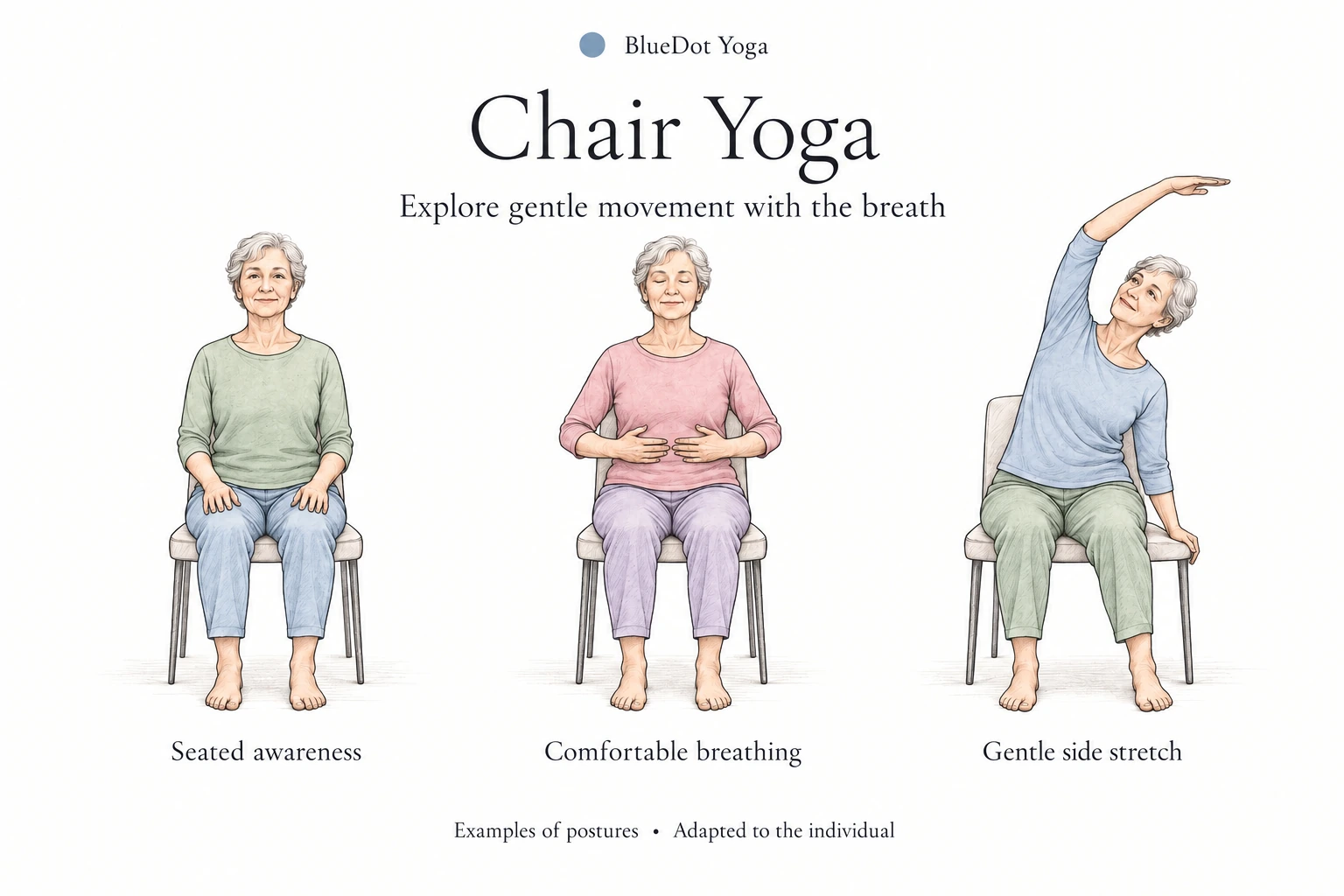
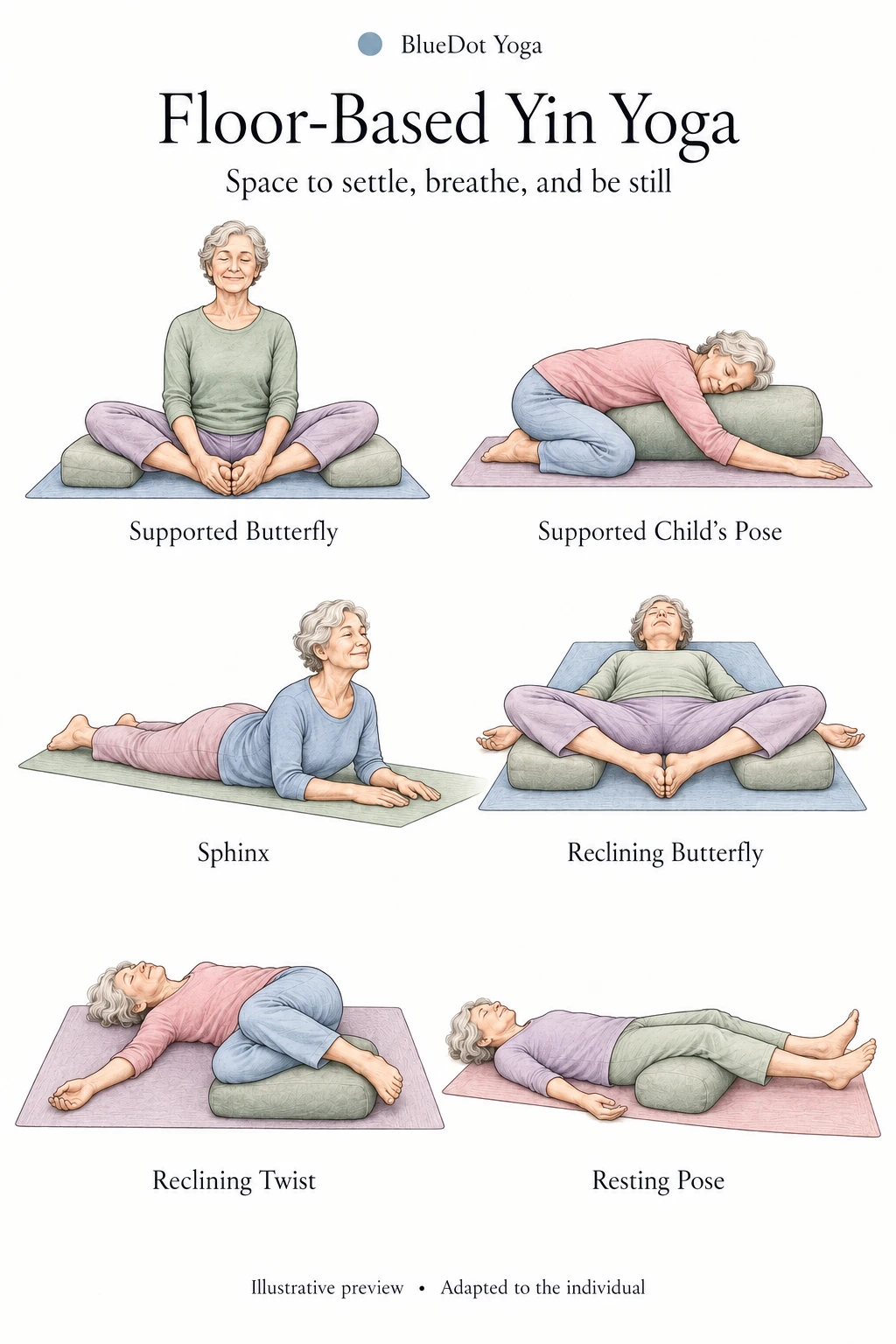
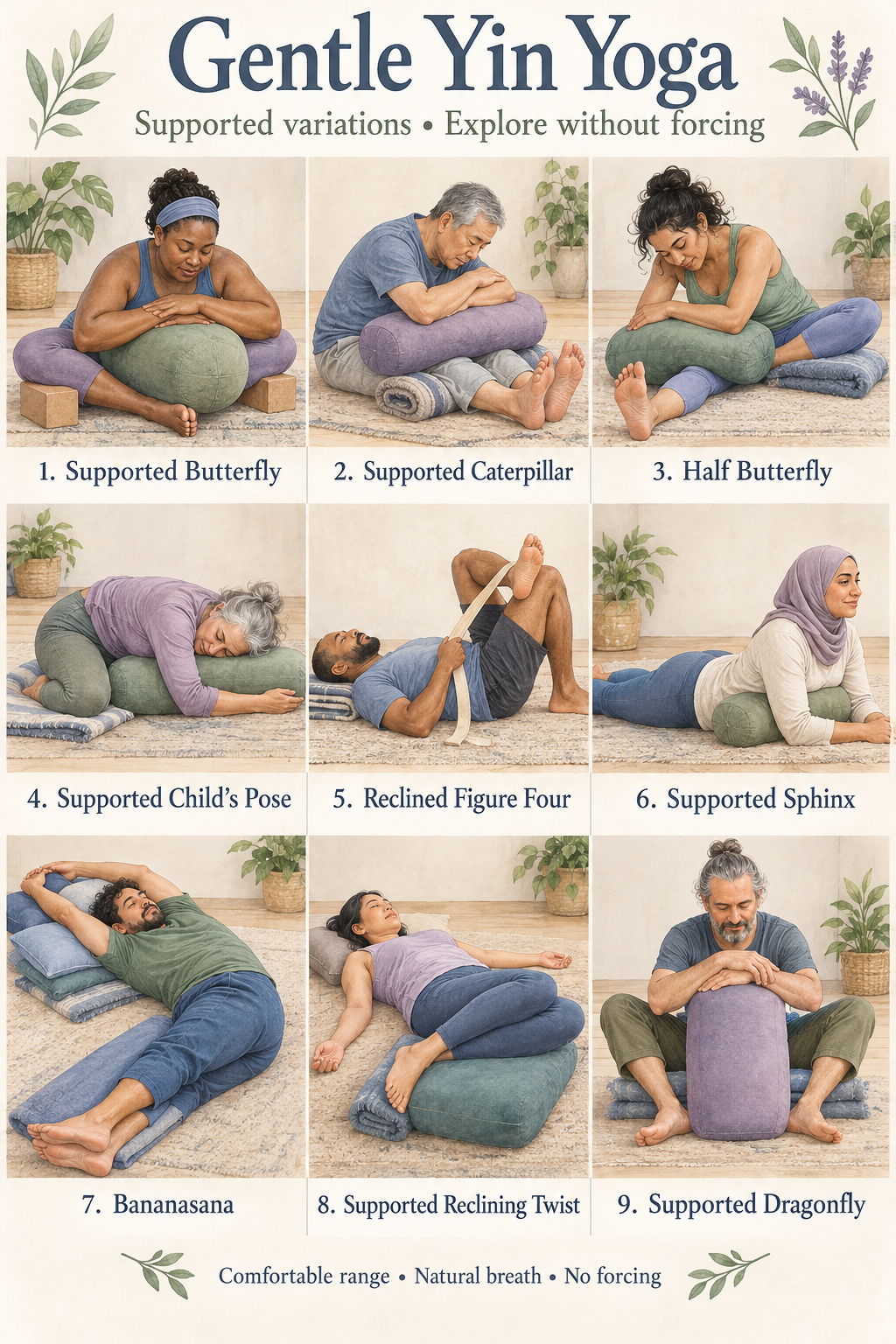
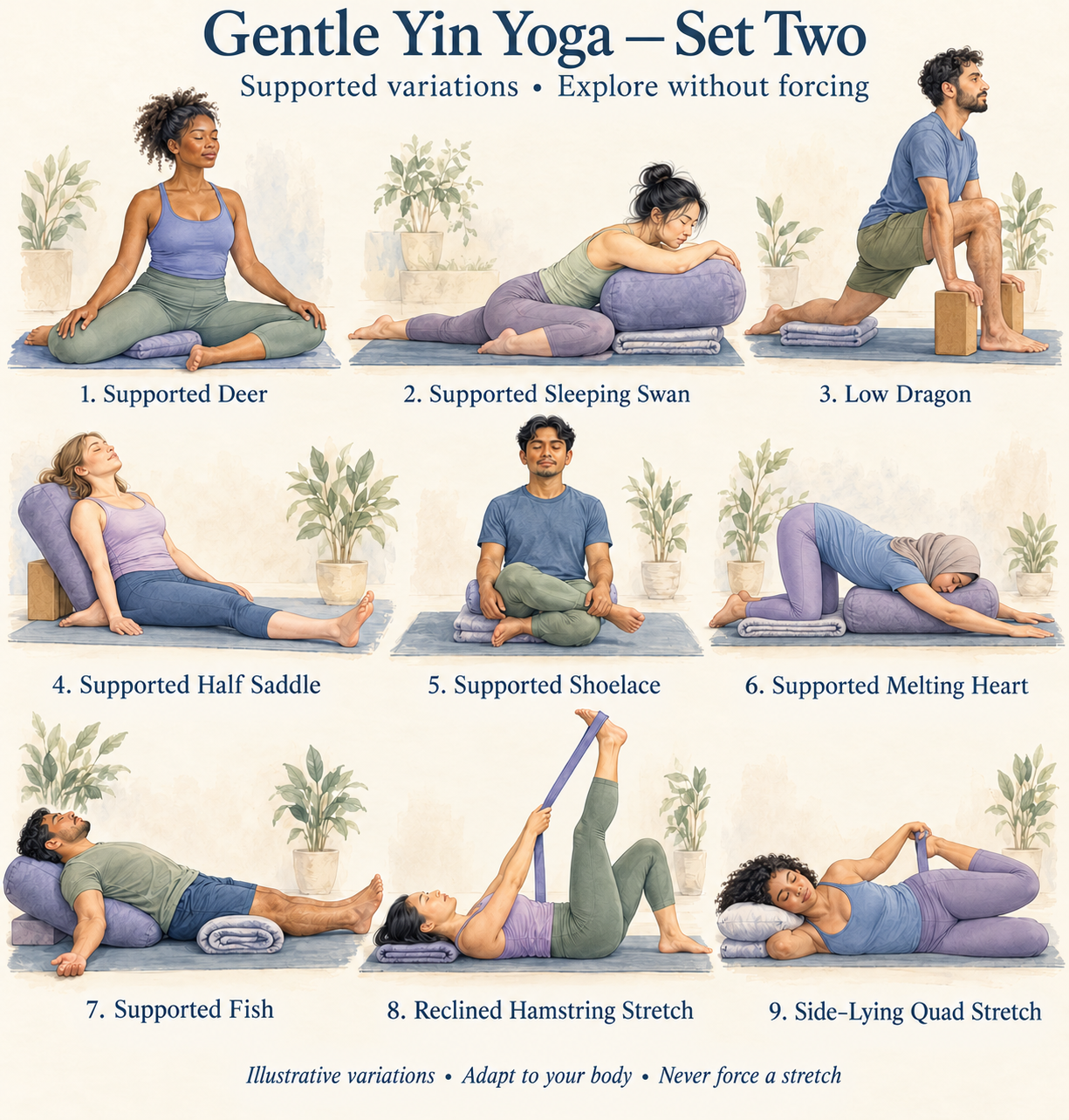
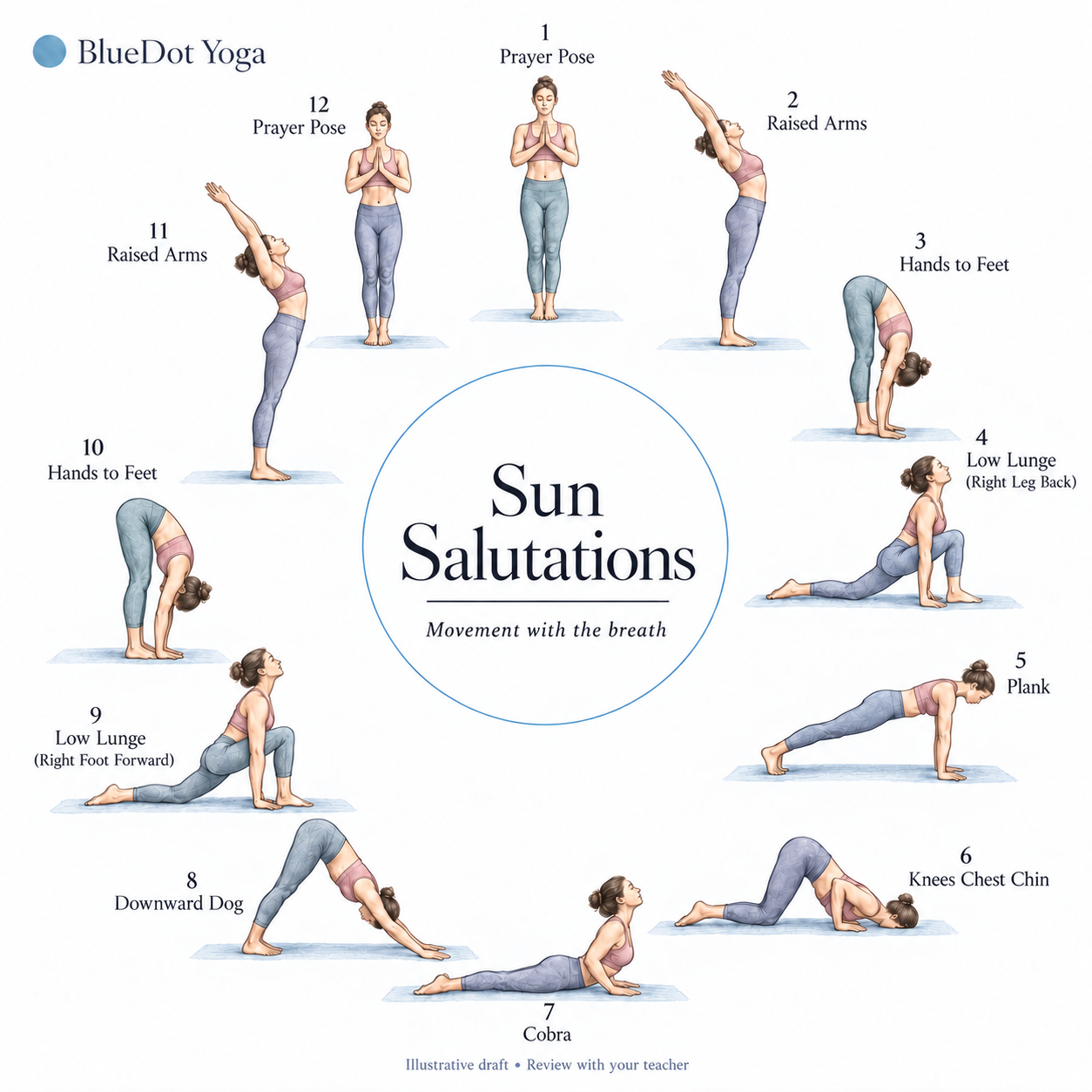
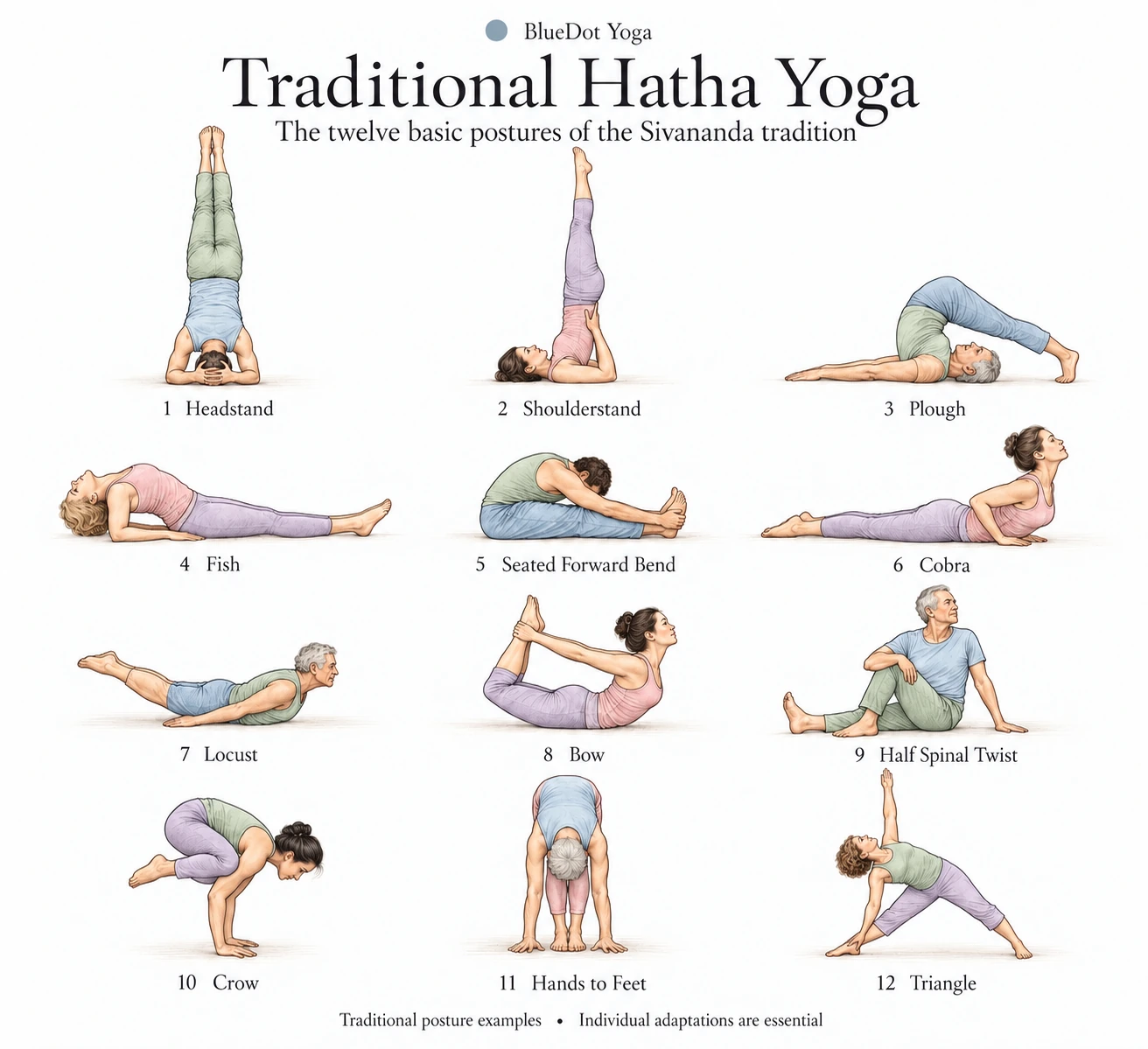
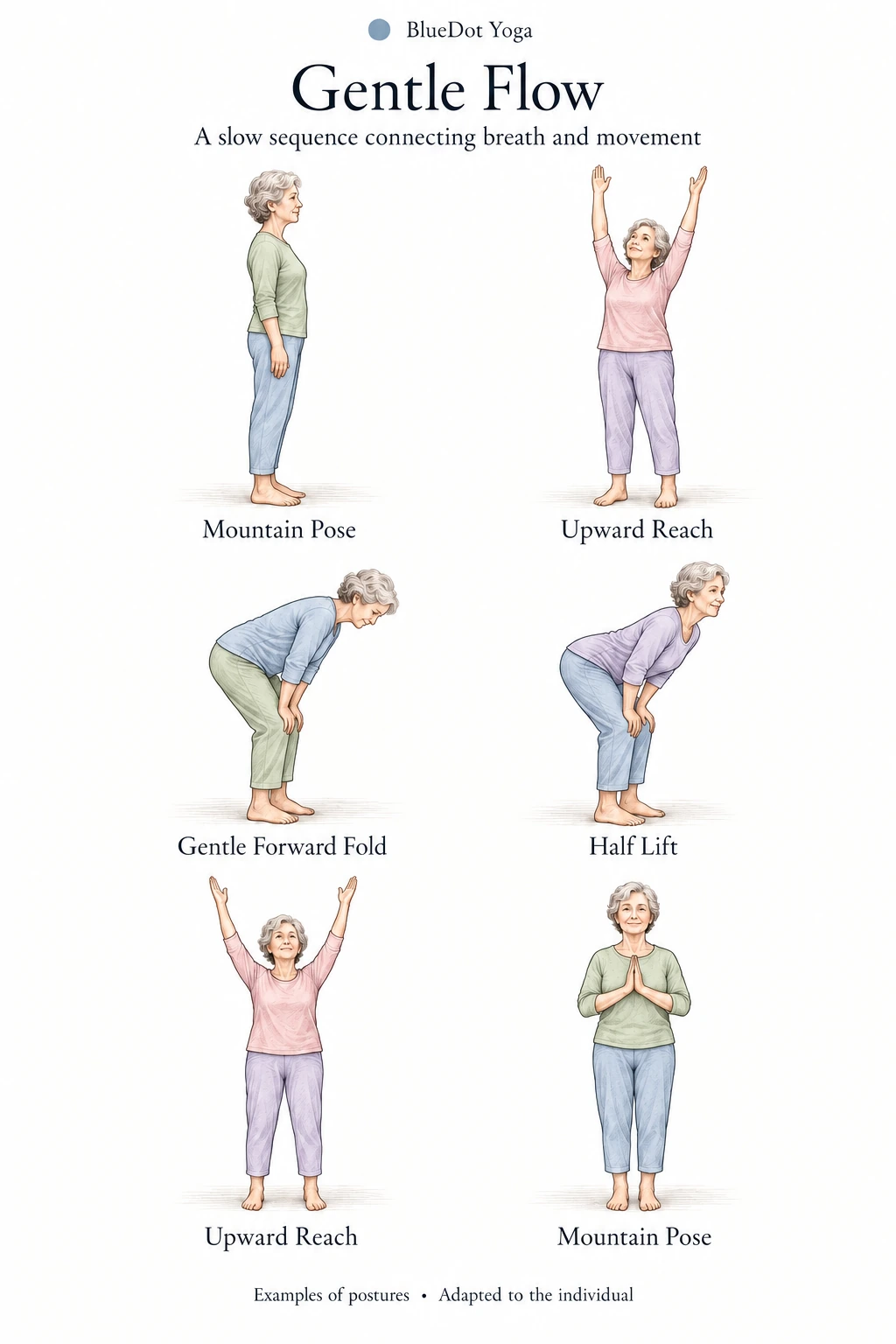
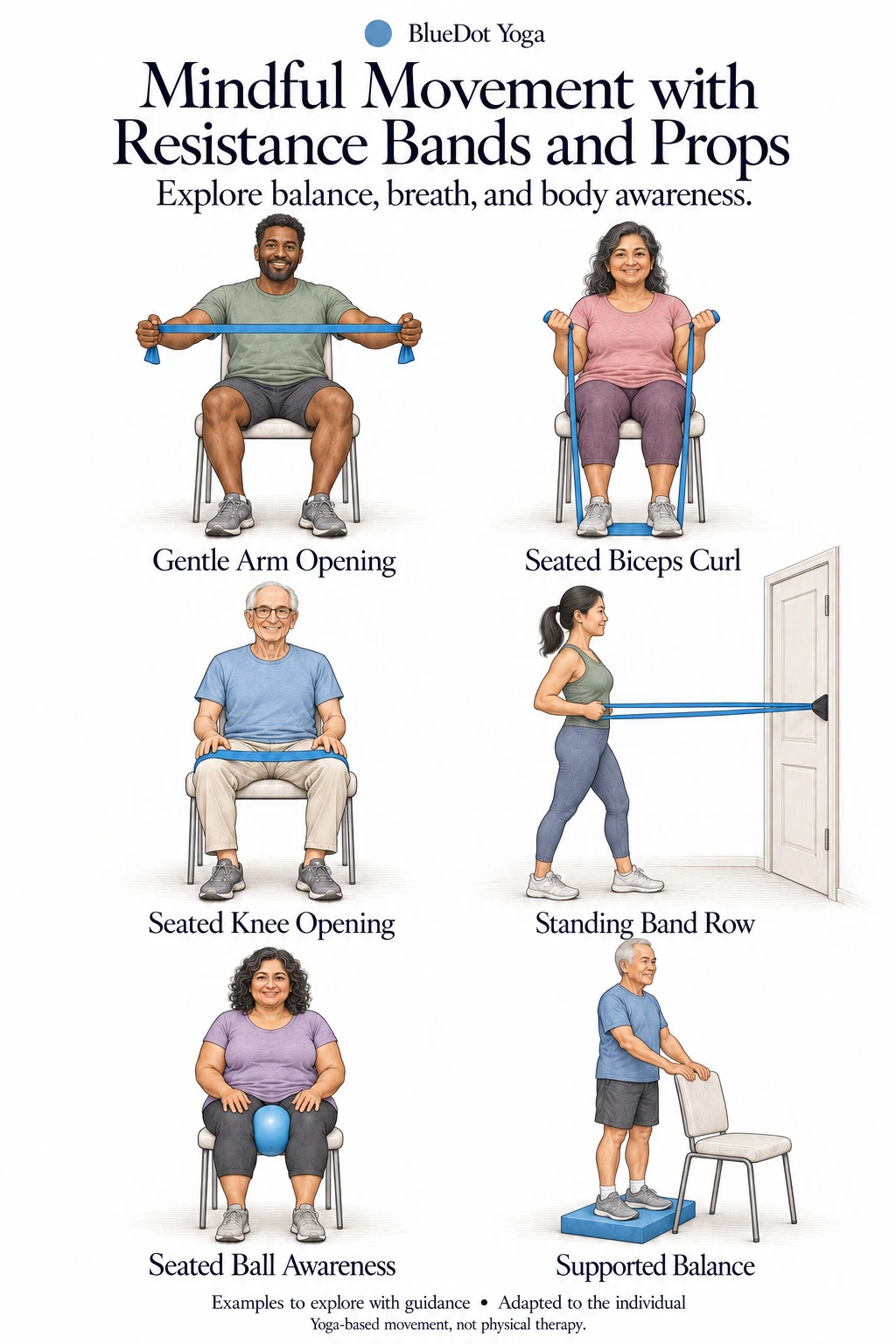
These illustrations are examples only. Actual classes vary, with postures and movements adapted to participants’ needs and comfort.
Alongside yoga postures and mindful breathing, we incorporate resistance bands, soft balls, and other props to explore gentle movement, balance, and awareness of our core and sense of center. Move with the breath, with space to soften and let go.
We do not provide physical therapy. These illustrations are a glimpse of possible class activities, not step-by-step instructions or a sequence to complete.
Alan has taught water aerobics at locations across Los Angeles. By arrangement, BlueDot Yoga offers small-group and private sessions at a private location, with details provided when arranging your session. These sessions bring together water aerobics and elements of yoga in a warm, supportive setting (weather permitting).
Move with the water
Sessions can combine gentle yoga-inspired movement and water aerobics with the relaxing sensation of jacuzzi jets. The pace and activities can be planned around the group or individual.
Optional infrared sauna
An infrared sauna may be included with a water-based session or incorporated into other pre-planned custom classes and course work.
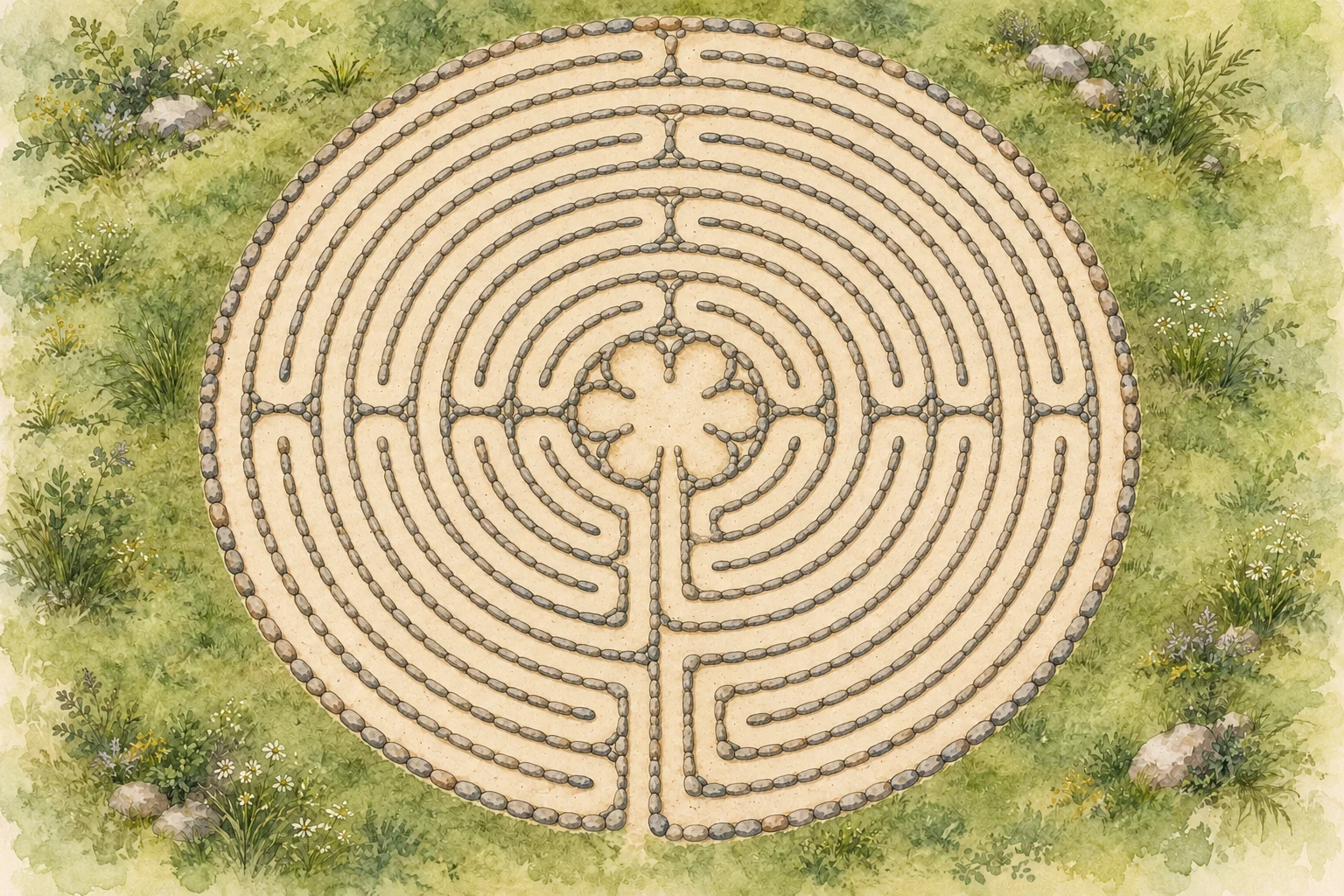
BlueDot Yoga offers the opportunity for a meditative walk through an outdoor, 11-chamber labyrinth. Follow the path at an unhurried pace, letting each step become a chance to pause and notice.
View larger ↗Illustrative example of an outdoor labyrinth.
A path for presence
As you walk, you might rest your attention on the feeling of your feet, your breath, or the sounds around you. There is no special pace to keep and no particular experience to achieve.
Make it your own
Walk quietly, pause when you wish, or take time afterward to reflect. The labyrinth can offer a simple setting for stillness, contemplation, and connection with the outdoors.
Alan Kaye founded BlueDot Yoga to create a welcoming place for gentle movement, mindful breathing, meditation, and community. His approach encourages people to begin where they are, move at their own pace, and make room for greater ease and connection.
Alan’s journey began in 1968 with yoga, meditation, and chanting in Santa Monica. In 1971, he spent a year exploring guided imagery and breathwork through a practice he called Blue Dots. He also took part in a year-long, physician-led biofeedback research program and studied Zen Buddhism. These early experiences grew into a lifelong interest in the relationship between body, mind, and awareness.
He began placing small, removable blue dots around his apartment, later keeping them in his home and business. When he noticed one, he paused, noticed what was on his mind, and took a couple of easy breaths before returning to his day. The name BlueDot also brings to mind Earth seen from space: our small blue home, shared by people, animals, plants, and countless forms of life. That view reminds him that he is part of something larger.
Over the years, he has practiced at yoga studios nationwide and in India, Thailand, Bali, Vietnam, and the Caribbean, and studied in Sivananda ashrams around the world.
He completed two 200-hour yoga teacher trainings, in Hatha Yoga and the Sivananda Yoga lineage. His teacher in the Sivananda Yoga lineage is Swami Sitaramananda. He also holds a certificate of completion in Loyola Marymount University’s Prime of Life Yoga program. His further training includes Chair Yoga and iRest Yoga Nidra at Levels 1 and 2. Alan has participated in three-day and ten-day silent retreats. During his time in ashrams, he occasionally practices mouna—the intentional observance of silence. He is also a California Certified Massage Therapist.
Alan completed a one-year course in positive psychology at Kripalu, taught by Tal Ben-Shahar, PhD. He also participated in a year-long program at Stanford University, learning to apply cognitive behavioral therapy (CBT) skills to his own experience of pain and everyday life.
His Ayurvedic studies include certification as an Ayurvedic Wellness Counselor and certification in Ayurvedic nutrition and cooking, Food as Medicine, and Yoga of Recovery.
Alongside his yoga journey, Alan raised a family and built a career in laboratory medicine, including founding and leading a national women’s health laboratory.
Service has been another thread throughout Alan’s life. He co-founded the National Cervical Cancer Coalition, volunteered with the National Cancer Institute, and trained as a volunteer grief-group leader with Our House Grief Support Center. These experiences reflect his longstanding commitment to supporting people through life’s challenges.
At BlueDot Yoga, Alan brings this background to an integrative approach to yoga that emphasizes gentle practice, breathwork, and present-moment awareness. Whether you are new to yoga or returning to it, the invitation is simple: explore with curiosity, respect your own limits, and find connection with yourself and others.
We practice as ourselves, and alongside one another.
BlueDot Yoga is a place for people drawn to movement, meditation, and a little more space to listen. You can begin here with a few minutes of practice, then carry that steadiness into the conversations and connections of daily life.